Key Takeaways
- Bristol's population reached around 472,000 in the 2021 Census (ONS), but the wider Bristol travel-to-work area pulls in roughly 1.1 million people across Bath, Weston-super-Mare, Portishead, and the Severn corridor — meaning "bristol seo agency" searches come from far more postcodes than BS1-BS41.
- The demand is concentrated in fewer terms than most owners expect: our June 2026 Google Ads data puts "bristol seo agency" at ~720 searches/month and "seo bristol" at ~590, while "local seo bristol" — the term agencies target on instinct — gets just 20.
- BrightEdge's widely cited channel research found organic search drives 53% of all website traffic across industries — for Bristol service businesses competing against London-based agencies on paid CPCs, the practical reliance on organic is higher still: our June 2026 Google Ads data puts the CPC on "bristol seo agency" at over $18 a click (roughly £14).
- Bristol's city region is home to over 20,000 active businesses (ONS UK business counts), and BrightLocal's published research has repeatedly found that most small businesses haven't fully completed their Google Business Profiles — a large competitive gap for any Bristol business willing to do the basics well.
By Sam Butcher, Founder of RnkRocket — last updated June 2026
Bristol has a geographic SEO problem that nobody talks about. When somebody types "seo bristol" into Google, the IP address sending that query could be sitting in a flat in Clifton, a kitchen in Bath, an office on the Cardiff side of the Severn Bridge, or a coffee shop in Newport. Google's local algorithm tries to guess which of those searchers actually wants a Bristol agency, and it gets it wrong often enough to make local rankings unstable for anyone targeting the head term.
I build SEO software for a living, and Bristol is the market we study most closely — I've spent an unreasonable amount of time in this city's SERPs. The single most consistent pattern I see is owners who think they're competing against the agency two streets away in Stokes Croft, when in reality they're competing against a Bath-based competitor whose office is fifteen miles away but whose website is better at telling Google "we serve Bristol too." If you're a Bristol business owner reading this, the work you need to do isn't the same as the work a Manchester or Leeds business owner needs to do — and most generic SEO guides won't tell you that.
This is the deep-dive sister piece to our Local SEO Bristol 2026 guide, which covers the day-one tactical fundamentals. This one is for owners who've already done the basics and want to understand the city's actual search dynamics — neighbourhood by neighbourhood, industry by industry, with honest pattern observations rather than dressed-up case studies.
Bristol's SEO landscape in 2026
We pulled the live Bristol SERPs for this cluster in June 2026 (DataForSEO, searcher located in Bristol), alongside Google Ads search-volume data for the head terms. Here's what the data actually shows.
The volume distribution surprises most people. "seo bristol" gets around 590 searches a month and "bristol seo agency" around 720 — but "local seo bristol", which every agency targets on instinct, gets just 20. "seo services bristol" and "seo company bristol" sit at around 210 each. If you're building landing pages for this cluster, the agency-phrasing terms are where the demand actually is, and the difference between targeting the right phrasing and the wrong one is a 35x volume gap.
For "bristol seo agency", the top five organic results are all dedicated Bristol agency pages — no directories, no generic nationals winning on domain strength alone. The #1 result leads its title with AI search positioning ("Bristol SEO Agency Built For AI Search"), which tells you where the competitive front line has moved. At least one nationally focused multi-office agency ranks in that top five via a dedicated Bristol landing page, which is the standard play for non-local firms — and it works. The first directory (Sortlist) doesn't appear until position 9.
The local pack under that term is more revealing than the organic results: as of our June pull, the three pack spots were held by firms with 105, 29, and 3 reviews respectively. A firm with three reviews holding a pack position on a 720-volume commercial term is the kind of gap that doesn't stay open long — and it tells you the pack on this term is winnable on review velocity alone.
"seo services bristol" is where the Bath spillover shows up in the wild: the #2 organic result in our pull was an agency based out towards Bath, outranking most of the city's own agencies for a Bristol service term. That's the commuter-corridor dynamic this guide keeps returning to, visible on the highest-intent page of the SERP. The Clutch directory appears at position 8.
"best seo agency in bristol" has too little volume for Google Ads to even report a figure, despite being the phrasing every owner thinks customers type. As of June 2026, none of these head terms was showing an AI Overview in our pulls — the Bristol agency cluster is still a traditional pack-plus-organic SERP, though that's worth re-checking quarterly given how quickly AI Overviews have spread across commercial queries elsewhere.
The pattern across the cluster: Bristol's SEO market is mature enough that thin pages don't rank, but small enough that one well-built page and a moderate link profile can break into the top five inside six months. That's a workable opportunity if you're prepared to put in the time.
Industries with the highest Bristol SEO opportunity
Not every Bristol industry is equally worth chasing organic traffic for. Some have low search volumes but high conversion intent; others have huge volumes and brutal competition. The main local sectors break down as follows.
Digital and creative agencies (concentrated in BS1, BS2, BS8) — Bristol's digital sector has expanded since 2019, and Tech Nation's UK Tech Ecosystem reports rank Bristol consistently in the top five UK regional tech hubs outside London-Manchester. The search competition here is fierce because every agency has at least one ex-SEO person on staff. Realistic opportunity: niching down. "Bristol B2B SaaS marketing agency" or "Bristol e-commerce SEO" will get you somewhere; "bristol digital agency" won't.
Aerospace and engineering (Filton, BS34, Patchway) — Bristol's aerospace sector around the BAE Systems and Airbus facilities at Filton represents a high-value but low-volume search market. "Aerospace consultancy Bristol" gets maybe 30 searches a month, but the lifetime customer value is enormous. This is a market where SEO matters less than relationship-driven sales, but a well-built website still earns leads from procurement teams doing supplier research.
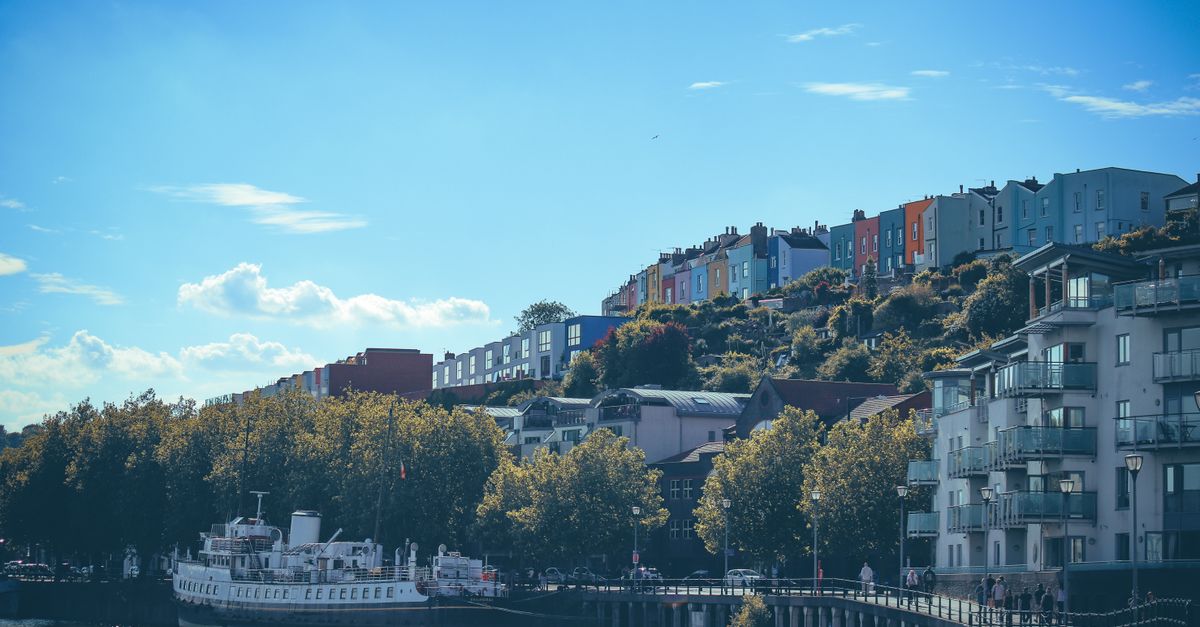
Marine and harbourside (Bristol Docks, Wapping Wharf, BS1) — Marine services, harbour businesses, and the cluster of food and drink venues around Wapping Wharf and Cargo represent a tourism-adjacent search market. "Restaurants Wapping Wharf" gets healthy seasonal volume; "boat moorings Bristol" is niche but well worth ranking for if you're a marine business.
Food and drink (Stokes Croft BS1/BS2, Bedminster BS3, Gloucester Road BS7) — Bristol's independent food scene generates enormous search volume. "Best restaurants Stokes Croft," "vegan Bristol," "brunch Bedminster" — all of these are searched in the thousands monthly per public keyword tools. The competition is fierce but the SEO maturity of most independent operators is low, so a properly optimised GBP plus a well-built website can dominate within months.
Professional services (legal, accountancy, financial advice) — distributed across BS1, BS8, and BS9. Search volumes for "solicitor Bristol," "accountant Bristol," "financial advisor Clifton" are healthy and commercial intent is high. The competition includes a handful of large multi-office firms, but neighbourhood targeting (more on this below) gives smaller firms a real shot.
A rough opportunity ranking based on publicly available search-volume data:
| Industry | Monthly Search Volume (head term) | Competition | Realistic Opportunity |
|---|---|---|---|
| Restaurants/cafes (by neighbourhood) | 5,000+ combined | Moderate | High (most GBPs are weak) |
| Trades (plumber, electrician, etc.) | 3,200+ combined | High | Moderate |
| Professional services | 1,800+ combined | High | Moderate-High (neighbourhood targeting works) |
| Estate agents | 1,400+ combined | Moderate | High (especially neighbourhood-specific) |
| Digital agencies | 1,100+ combined | Very high | Low (unless niching) |
| Aerospace/engineering | 200-400 combined | Low | High (low effort, high value) |
| Marine services | 150-300 combined | Low | High (very niche, very rankable) |
The commuter-town spillover problem
This is the bit most Bristol SEO guides skip, and it's the single biggest reason local campaigns underperform.
Bristol's travel-to-work area extends roughly 30 miles in every direction. Around 90,000 people commute into Bristol daily from Bath, North Somerset, South Gloucestershire, Newport, and the wider Severn region, according to ONS commuting data. Each of those commuters is a potential customer for Bristol businesses, but each of them is also typing search queries from outside the city.
What that means in practice: a solicitor in Clifton ranks well for "solicitor Bristol" when somebody searches from BS8 itself. But when a commuter from Bath types the same query while sitting at their desk on St James's Parade, Google's local algorithm is more likely to show them Bath-based solicitors first. The Clifton firm has lost a perfectly good lead to a geographic quirk.
The fix isn't to pretend you're a Bath agency. It's to build supporting content that captures the commuter intent without misrepresenting where you are. A page titled "Solicitor for Bath commuters working in Bristol" sounds clunky but ranks. A page that explains your office is a six-minute walk from Temple Meads (which catches commuters arriving by train from Bath, Weston, Cardiff, and Newport) ranks. Mentioning specific commuter routes — "we work with clients across the M4 corridor and the Portway" — gives Google geographic signals that pure neighbourhood content doesn't.
The pattern works in both directions. If you're a Bristol business serving customers in Portishead, Clevedon, or Weston-super-Mare, you need dedicated landing pages for each town. Not duplicated boilerplate — actual content explaining how you serve clients there, journey times, parking, drop-off arrangements, anything that proves you've thought about it. Whitespark's Local Search Ranking Factors survey consistently identifies "dedicated location pages with unique content" as one of the highest-weighted ranking signals for satellite-town searches.
Cardiff is the trickiest case. Severn Bridge tolls were abolished in December 2018, which collapsed the psychological barrier between Bristol and South Wales. Cardiff-based businesses have increasingly targeted Bristol search terms since then — you can see this directly in the SERPs for queries like "digital agency south west" and "marketing agency bristol cardiff." There's no reason a Bristol business can't do the same in reverse if their service genuinely extends across the bridge. Just be honest about it.
Neighbourhood-level SEO
This is where Bristol gets interesting. The city's neighbourhood identities are unusually strong — somebody who lives in Bedminster doesn't think of themselves as living in "Bristol" in the same casual way somebody from a Manchester suburb might. They live in Bedminster. They drink in Bedminster. They search for things in Bedminster.
That means neighbourhood-targeted SEO works in Bristol far better than it works in most UK cities. The breakdown by area:
Clifton and Hotwells (BS8) — High-income, professional, brand-conscious residents. They search for premium service terms — "best dentist Clifton," "private gp clifton," "fine dining clifton." Search volumes are moderate (50-200 per term) but conversion intent is the highest in the city. Landmarks that boost local relevance signals: Clifton Suspension Bridge, the Downs, Whiteladies Road, Royal York Crescent.
Redcliffe and Temple (BS1) — Business-district crowd. Searches skew towards lunch spots, professional services, and conference venues. Landmarks: Temple Meads station, St Mary Redcliffe, Finzels Reach. A page that mentions "five minutes from Temple Meads" picks up significant commuter-search relevance.
Stokes Croft and Montpelier (BS1/BS2) — Independent businesses, creative agencies, alternative culture. Search terms skew towards independents, vegan options, vintage shops, and creative services. The Banksy mural and Cabot Tower are useful landmark mentions. Competition from established independents is high but the SEO sophistication is generally low — a well-built page beats most of what's currently ranking.
Bedminster and Southville (BS3) — North Street has become one of Bristol's strongest food and drink corridors since around 2018. Google Trends shows sustained growth in searches for "restaurants North Street," "BS3 cafes," and "best brunch Bedminster" over the last couple of years — you can check the curves yourself. This is currently the highest-opportunity neighbourhood in the city for hospitality SEO.
Bishopston and Gloucester Road (BS7) — Gloucester Road is widely cited as the longest stretch of independent shops in Europe (depending on which source you believe), and that gives the area an outsized SEO profile. The Bristol Independents directory lists hundreds of independent retailers, cafes, and service businesses on or just off Gloucester Road. They rank well with relatively little effort because there's so much hyper-local search activity. Mentioning Gloucester Road by name is one of the most underused tactics in BS7 SEO.
Filton and Patchway (BS34) — Aerospace, engineering, retail park territory. Lower search volumes for local-life terms but very high volumes for B2B and industrial supplier searches. If you sell anything to Airbus, GKN, or Rolls-Royce suppliers, this is the geography your page should be optimised for.
Wapping Wharf and Harbourside (BS1) — Tourism, restaurants, events. Strong seasonal search patterns peaking April through September. Bristol 24/7's coverage of the Wapping Wharf food cluster gives a useful real-world inventory: roughly two dozen permanent venues at Cargo plus the surrounding harbourside, generating substantial search volume for "things to do Bristol harbourside" and similar queries.
Building a single landing page targeting one of these neighbourhoods, with genuine local detail and a couple of natural backlinks from neighbourhood-specific sources (local press, neighbourhood blogs, the area's BID where one exists), will outperform a generic "Bristol services" page nine times out of ten.
Three Bristol industries where SEO compounds — what to focus on
Rather than dress up made-up client outcomes as case studies, the more useful exercise is to look at three industries with strong Bristol concentration and walk through what actually works. The pattern observations below come from studying the Bristol SERPs and the businesses that win in them — common patterns, not cherry-picked wins.
Clifton estate agents (BS8 cluster)
Clifton has one of the densest concentrations of independent estate agents in the South West. A search of Companies House for active SIC code 68310 (estate agents) registered to BS8 postcodes returns dozens of independent firms, on top of the regional offices of the national chains. That density means the head term "estate agent Clifton" is competitive, but the long-tail is wide open.
What works in this market: neighbourhood-of-a-neighbourhood targeting. Clifton breaks down into Clifton Village, Clifton Wood, Hotwells, Redland, Cotham, and Westbury Park — each with its own property profile, average prices, and search volume. Independent agents who build dedicated landing pages for each sub-neighbourhood — with genuinely different content covering recent local sales, school catchment notes, and transport links — consistently outrank the national chains' generic "Clifton" pages. The other reliable lever is GBP photo volume: Whitespark's Local Search Ranking Factors research finds review count and photo count are among the heaviest weighted local-pack factors, and Clifton-based agents who treat GBP as an active weekly channel rather than a one-time setup pull noticeably ahead.
Wapping Wharf hospitality (BS1 cluster)
The Wapping Wharf and Cargo cluster on the harbourside is one of the most concentrated independent food and drink corridors in the city. Bristol 24/7's coverage and the venue's own published occupant list put the working count at roughly two dozen permanent restaurants, cafes, bars, and producers, with seasonal pop-ups on top.
What works in this market: GBP first, website second. Independent restaurants frequently launch with a beautiful website and a near-empty GBP — wrong primary category, no photos beyond the cover image, no menu posted, no Q&A populated. Fixing the GBP alone (correct category, 50+ photos covering food and interior, full menu posted via the menu attribute, weekly GBP posts for events and specials, pre-populated Q&A answering the questions diners actually ask) typically does more for walk-in traffic than any amount of website tinkering. Adding restaurant schema to the website for menu items and reviews compounds the signal. The seasonal pattern matters too: searches for "Bristol harbourside restaurants" spike from April through September every year — the venues that pre-load summer content in February consistently outrank those that scramble to publish in June.
Bishopston independents (Gloucester Road BS7)
Gloucester Road runs roughly two miles north from the city centre and is documented in the Bristol Independents directory as one of the highest-density independent retail strips in the UK. The mix is broad — specialist food shops, independent bookshops, repair specialists, gift shops, salons, cafes — and search behaviour reflects that breadth.
What works in this market: a category-page-per-product-line approach combined with content marketing. Independent retailers on Gloucester Road frequently have decent branded search traffic but rank for nothing commercial — Google indexes the site but no page is built to win a category term. Mapping 20-30 viable product or category terms and building dedicated landing pages for the highest-intent ones is the foundation. On top of that, a regular blog cadence (Bristol gift guides, seasonal product roundups, product-care guides) targets the long-tail queries that customers in the BS6/BS7 catchment actually search for. Adding LocalBusiness schema with a Gloucester Road address signals neighbourhood relevance directly to Google. The pattern I see consistently: independents who treat the website as a publishing platform rather than a brochure compound organic visibility steadily over 9-12 months.
Three caveats. First, these patterns assume a functional starting point — broken sites, manual penalties, or expired domains have to be fixed before any of this work pays back. Second, all three industries are in neighbourhoods with strong local-search culture; the same tactics in a less neighbourhood-conscious area would produce smaller wins. Third, none of this is guaranteed. Google can and does change its algorithm. What works in 2026 may not work identically in 2027.
Bristol SEO tools that locals actually use
If you read the major SEO blogs you'd think every campaign requires a £400/month Ahrefs subscription. For most Bristol SMEs, that's overkill. The recommended stack for owner-operated businesses doing their own SEO:
Free and essential: Google Search Console, Google Business Profile, Google Analytics 4, Bing Webmaster Tools, and Microsoft Clarity for session recordings. That's the entire core toolset for businesses doing under £500k turnover. Successful campaigns regularly run on nothing more than these.
Low-cost paid additions: Ubersuggest (£20/month) for basic keyword data, or Mangools (£25/month) which is slightly stronger for SERP analysis features. For local rank tracking specifically, Local Falcon's GBP grid views are excellent value at around £20/month.
The mid-tier upgrade: Ahrefs Lite is $129/month — call it £100, or around £85 a month if you pay annually — and is the first tool worth buying when you're running campaigns for clients or running multiple sites. Don't bother below that point.
For Bristol-specific data, the Bristol Chamber of Commerce business database and Bristol City Council's open data portal are both useful for understanding the local market. The Bristol Pound (closed September 2020, but the historical data is still online) gives a useful snapshot of the city's independent business landscape. Bristol 24/7 and Bristol Live are the two most useful press outlets for outreach — both still publish local business news and both will link to genuinely newsworthy stories.
Common Bristol SEO mistakes
Reviewing Bristol business websites over the last few years, the mistakes cluster around a small number of patterns.
Targeting "Bristol" when your service area is South Gloucestershire — Plenty of businesses in BS34, BS37, and the wider South Gloucestershire area target "Bristol" in their copy and then wonder why their map-pack rankings are weak. South Gloucestershire is a separate local authority and Google treats it as a distinct geographic entity. If your office is in Yate, target Yate. The volume is lower but the rankings are achievable.
No neighbourhood content — covered above but it bears repeating. A single "areas we serve" page listing 30 neighbourhoods doesn't rank for any of them. One properly built page per neighbourhood does.
Generic stock photography — Bristol has a strong visual identity. Suspension Bridge, Wapping Wharf cranes, Stokes Croft murals, the M Shed, College Green. Using stock photos of generic city skylines on a Bristol services page signals "this could be any city" both to Google and to visitors. Real local photography costs almost nothing and pays back many times over.
Ignoring Bristol-specific directories — Visit Bristol, Bristol Independents, the Federation of Small Businesses Bristol branch, and the relevant trade-specific Bristol directories all still drive referral traffic and pass useful local relevance signals. They're a more useful link-building target for most local businesses than chasing national publications.
Treating GBP as a one-time setup — Google Business Profile is an active channel, not a passive listing. Posts, photo updates, Q&A management, and review responses all feed into local rankings. Businesses ranking consistently in the Bristol local packs all treat their GBP as a weekly task, not an annual one. For a deeper walk-through, see our Google Business Profile optimisation guide.
90-day Bristol SEO action plan
The plan I'd give a Bristol business owner who'd just read this guide and asked "okay, where do I start?"
Weeks 1-2: Diagnostic and foundation
- Run a Google Search Console audit. Note your top 20 ranking queries and your top 20 impression-but-not-clicking queries.
- Claim and fully build out your GBP. Categories, services, products, full description, opening hours including bank holidays, 30+ photos.
- Set up GA4 and Microsoft Clarity if you haven't already.
- Identify your three priority Bristol neighbourhoods or satellite towns.
Weeks 3-4: Content groundwork
- Build one dedicated landing page per priority neighbourhood. Aim for 800-1,200 words each with genuine local detail.
- Add LocalBusiness schema to your site footer, including your full address and service area.
- Audit your site for thin pages (under 300 words) and either expand or noindex them.
Weeks 5-8: GBP momentum
- Post weekly to your GBP. Photos, offers, news, events.
- Build a review-request workflow. Aim for 2-3 new reviews per week.
- Respond to every review, positive and negative, within 48 hours.
- Add 5-10 new photos per week for the first month.
Weeks 9-12: Authority building
- Identify 10 Bristol-relevant link prospects. Local directories, neighbourhood blogs, business associations, complementary local businesses.
- Pitch one genuinely newsworthy story to Bristol 24/7 or Bristol Live.
- Write two longer-form content pieces (1,500+ words) targeting your highest-priority commercial keywords.
- Review your Search Console data weekly and adjust the plan based on what's actually moving.
This plan won't put you at position one for "bristol seo agency" in 90 days. Nothing legitimate will. But it will move most Bristol service businesses meaningfully up the rankings for their realistic target terms, and it will set up the foundations for a campaign that compounds over 12-18 months. For the broader methodology behind it, see our complete local SEO guide.
Frequently Asked Questions
How long does Bristol SEO take to work?
For a Bristol service business with a reasonable starting point, expect to see meaningful local-pack movement within 60-90 days and meaningful organic ranking improvements within 4-6 months. Anyone promising faster should be able to show you exactly which lever they're pulling — usually they can't. Competitive head terms like "bristol seo agency" or "solicitor bristol" can take 9-12 months to crack the top five.
Do I need a Bristol-based SEO agency to rank in Bristol?
No, but it helps. A non-local agency can absolutely rank you in Bristol if they're good. The advantage of a local agency is genuine market knowledge — they know the neighbourhoods, the press outlets, the directories, and the seasonal patterns. That can save months of campaign time.
What's the average cost of SEO in Bristol?
For a Bristol agency retainer with genuine local market knowledge, expect £600-£2,500 per month. You'll find legitimate national entry-level packages from around £250 — our small business SEO roadmap breaks down what each spend tier should deliver — but at that price you're buying GBP management and on-page basics, not local strategy. Below the £250 floor you're usually getting offshore work or AI-generated content; above £2,500 you should be getting strategy work and senior input, not just execution.
How is Bristol SEO different from London SEO?
Lower competition for head terms, much stronger neighbourhood identity, larger commuter-town spillover, and a smaller pool of agencies competing for local clients. The tactics are similar but the priorities are different — neighbourhood content matters more in Bristol, link building from London-based national publications matters less.
Does Google treat South Gloucestershire and Bristol the same?
No. They're separate local authorities and Google's local algorithm treats them as distinct geographic entities. If your business is in Yate, Thornbury, or Chipping Sodbury, you'll rank better targeting those locations than targeting "Bristol."
What about AI Overviews — should I be worried?
Watch, but don't panic. As of our June 2026 SERP pulls, none of the Bristol agency head terms was showing an AI Overview — the cluster is still a traditional pack-plus-organic SERP. But AI Overviews have spread steadily across commercial queries elsewhere, so re-check quarterly. When they do arrive, they reduce click-through to organic results but create opportunities for sites with strong topical authority to be cited in the overview itself — Google Search Central's published guidance recommends clear topical authority and well-structured content as the strongest signals for citation.
Related Reading
- Local SEO Bristol 2026 guide — the sister blog post covering tactical day-one fundamentals
- The complete local SEO guide — our pillar guide covering local SEO methodology across any UK city
- Google Business Profile optimisation — deep-dive on the single highest-impact local-search channel
- What is SEO? — the foundational pillar explaining how search rankings actually work
If you've read this far and you're a Bristol business owner wondering whether to do this yourself or hire help, the honest answer is: you can do the first 60 days yourself with this guide and the Local SEO Bristol 2026 guide as your roadmap. After that, the work shifts from execution to strategy, and that's usually when bringing in help pays back. When you're ready, our pricing page lays out exactly what RnkRocket costs and what's included — no inflated retainers, no twelve-month lock-ins, no guesswork.