Local SEO Bristol: How Local Businesses Rank in 2026
What actually moves rankings for local searches in Bristol — the GBP gotchas, neighbourhood signals, directory hierarchy, and the Bath spillover problem nobody talks about.

Key Takeaways
- Industry click-share studies consistently put Google's local pack at around 40%+ of clicks on local-intent searches — more than the entire organic block beneath it.
- 76% of people who search for something nearby on a phone visit a related business within 24 hours (Google Consumer Insights).
- Businesses with complete Google Business Profiles are 2.7x more likely to be considered reputable and 70% more likely to attract location visits (Google Business Profile Help).
- Local pack rankings correlate most strongly with proximity, primary GBP category, and review quantity — not on-page keyword density (Whitespark Local Search Ranking Factors, 2023).
When someone in Clifton types "plumber Redcliffe" into their phone at 9pm because their boiler's gone, Google has about 400 milliseconds to decide which three businesses appear in the map pack. Pull up that SERP and you can watch the decision get made — wrongly — any week you care to look. The plumber who shows up is often from Yate or Keynsham, not the actual BS1 plumber two minutes' walk from the search. That's the local SEO problem in one search query.
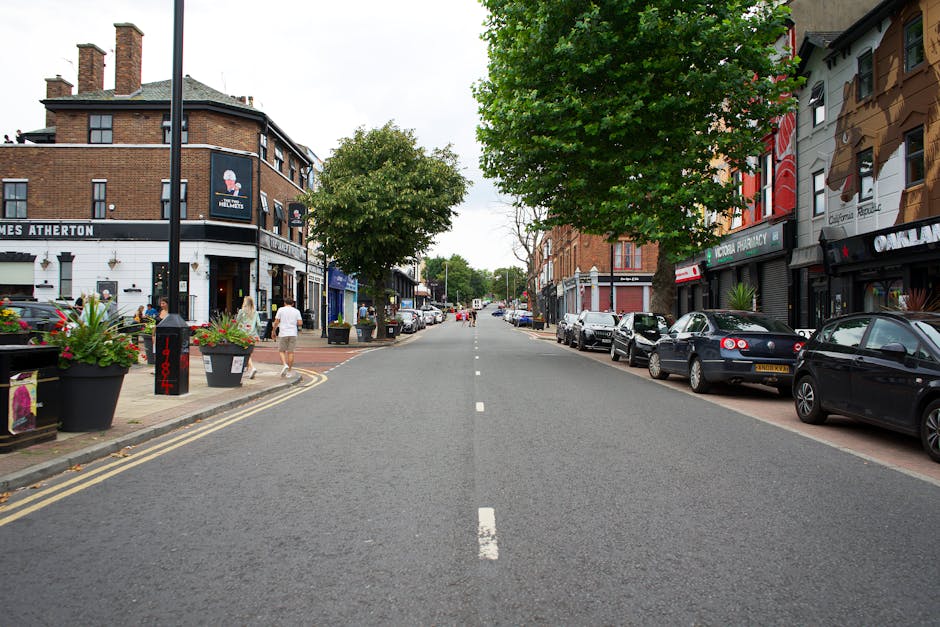
Bristol is a strange city for local search. It's a unitary authority that behaves like four cities stitched together — central BS1/BS2, the south (Bedminster, Southville, Knowle), the north fringe (Filton, Henleaze), and the east corridor (Easton, St George). Google treats these as one metro area for ranking purposes but users absolutely do not. Someone in Stokes Croft searching "coffee shop" expects results within walking distance, not in Cribbs Causeway.
Audit Bristol business websites for any length of time and the same five mistakes show up again and again — independent trades, agencies, retailers, restaurants. This is what actually moves rankings for "bristol seo agency" and every other local search term in this city, based on what's well-established in the local SEO research and what shows up in the live Bristol SERP data we pull.
What "local SEO Bristol" actually means in 2026
Local SEO in Bristol means competing in three layers at once.
The first layer is the local 3-pack — the map plus three business listings that appear above the organic results for any query with local intent. Google calls these "local results" and they're ranked by a separate algorithm from organic search, weighted heavily towards proximity, relevance (your GBP categories matching the query), and prominence (reviews, citations, brand signals).
The second layer is Google Maps itself — when users tap "see more" or open the Maps app directly. Maps shows roughly 20 results and applies similar ranking signals but with proximity given even more weight.
The third layer is organic results for local queries. "Bristol SEO agency" returns a 3-pack at the top, then organic listings underneath. The organic listings still get clicks — especially for considered B2B searches where users want to compare websites — but you need both layers to dominate the SERP.
A common mistake: business owners obsess over organic rankings and ignore GBP. BrightLocal's 2024 Local Consumer Review Survey found that 76% of UK consumers use Google to find local businesses weekly, and the local pack is the primary surface they interact with. If you're not in the pack, you're invisible to most local searchers regardless of where you rank organically. See our local SEO guide for the broader framework, or what is SEO if you're newer to the discipline.
Why Bristol businesses keep losing to Cardiff and Bath
This one frustrates us. Bristol sits in an awkward geographic sandwich. Cardiff is 45 minutes west, Bath is 12 minutes east, Weston-super-Mare is 25 minutes south-west, and the commuter towns of Portishead, Clevedon, and Thornbury all pull traffic in and out daily.
Google's local algorithm doesn't always understand these boundaries. We've seen three specific failure patterns:
1. The Bath spillover. Searches like "wedding photographer Bristol" frequently return Bath-based photographers because Bath has a denser concentration of premium service businesses with strong review counts. Google reads "Bristol-Bath" as a regional cluster. If you're a genuine Bristol-based business, you need explicit BS-postcode signals on every relevant page and in your GBP service areas to fight this.
2. The Cardiff confusion. This is rarer but happens with B2B SaaS and digital agency terms. Cardiff has a stronger tech-startup signal than Bristol does in Google's index, despite Bristol's actual tech sector being larger. For queries like "digital marketing agency south west", Cardiff results sometimes outrank Bristol ones.
3. The commuter-town drag. Businesses in Portishead, Clevedon, or Yate sometimes outrank central Bristol ones for Bristol-specific searches because they've targeted "Bristol" in their on-page content while serving a wider catchment. A Yate-based locksmith optimising hard for "locksmith Bristol" can outrank a BS1 locksmith who's been complacent.
The fix is consistent: explicit neighbourhood and postcode signals on-page, GBP service areas configured precisely, and citations that anchor your business to actual Bristol postcodes rather than the generic "Bristol" or "South West" tags.
Google Business Profile — Bristol-specific category gotchas
GBP is where most Bristol businesses lose the game before they've started.
Service-area vs storefront. This decision matters more than people think. If you have a shopfront customers visit, you're a storefront — show your address publicly. If you go to customers (mobile mechanic, plumber, photographer), you're a service-area business and you must hide your address and define your service area by postcode or city name. Google's support forums are full of service-area businesses suspended for exactly this — a residential address displayed publicly on a trades profile. Don't do this.
The primary category trap. Your primary GBP category is the single biggest ranking factor for which queries you appear in. "Solicitor" and "Family law attorney" return different results. "SEO agency" and "Marketing agency" return wildly different results. Whitespark's annual Local Search Ranking Factors survey consistently lists primary category as the #1 ranking factor for the local pack — above proximity for some query types.
For "bristol seo agency" specifically, the winning primary category is "Marketing agency" with "Internet marketing service" as a secondary. The category "Search engine optimisation agency" exists in Google's taxonomy but performs worse for general searches — fewer queries map to it.
Multi-location handling. If you've got two Bristol locations — say one in Clifton and one in Bedminster — each needs its own GBP listing with a distinct phone number and address. Don't try to run both through one profile. Google's listings policies are clear on this and the algorithm will suppress duplicates.
The BS-postcode issue. Bristol's BS postcode range extends from BS1 (central) out to BS40+ (covering parts of North Somerset that most people don't consider "Bristol"). When you set your GBP service area, use specific postcodes or named neighbourhoods rather than just "Bristol". A service area of "BS1, BS2, BS3, BS4, BS5, BS6, BS7, BS8, BS9" tells Google you serve actual urban Bristol. "Bristol" as a single area is ambiguous and often gets interpreted as the wider BS-postcode region including Weston-super-Mare.
Our Google Business Profile optimisation guide goes deeper on the category research and service-area configuration.
Bristol directory citations that actually move rankings
Which directories actually matter is the most common local SEO question there is, and most lists you'll find online are either out of date or written by directory owners themselves. Here's how we rank them, based on the published citation research and what shows up in the Bristol SERPs we monitor.
| Rank | Directory | Worth the effort? | Why |
|---|---|---|---|
| 1 | Google Business Profile | Essential | The only one that directly affects local pack rankings. |
| 2 | Bing Places | Yes | Microsoft's local index feeds ChatGPT and Copilot results. Growing in 2026. |
| 3 | Yell.com | Yes, but only the free listing | Still passes citation authority. Paid tier rarely worth it. |
| 4 | Apple Maps Business Connect | Yes | iPhone users default here. Free and fast to set up. |
| 5 | Bristol 24/7 business listings | Yes for B2C | Strong local brand authority, good referral traffic for hospitality and retail. |
| 6 | FreeIndex | Modest value | Reviews carry weight, profile is free, takes 20 minutes. |
| 7 | Bristol Live / Bristol Post directory | Marginal | High domain authority but low active user base in directory section specifically. |
| 8 | Visit Bristol | Tourism-only | Useful for hospitality, restaurants, attractions. Useless for B2B services. |
| 9 | Thomson Local | Skip in 2026 | Declining relevance; no evidence it still moves rankings in 2026. |
| 10 | Hotfrog / Cylex / Tupalo | Skip | Low-quality aggregators. Inconsistent NAP data can actively hurt you. |
The honest take on Bristol-local directories: Bristol 24/7 and Bristol Live are valuable for brand visibility but their ranking impact is modest. The single biggest local-citation lever is still consistent NAP (Name, Address, Phone) data across the top five entries above. Inconsistent NAP — different phone formats, missing suite numbers, abbreviated street names — is the citation problem that actually hurts rankings.
Moz's research on local search ranking factors consistently shows citation consistency as a meaningful contributor to local pack visibility, and BrightLocal's published research repeatedly links citation cleanup to substantial GBP visibility lifts — often from directory data the business had never thought about. Citation consistency is unglamorous and it works.
On-page tactics for Bristol pages
This is where most Bristol agency sites fail their own SEO test.
Neighbourhood inclusion in URLs and headings. A page targeting "plumber Bristol" should mention Clifton, Bedminster, Redcliffe, Stokes Croft, Easton, and other named neighbourhoods naturally in the body content. Not as a list — woven into sentences. "We work across Clifton, Redcliffe, and Bedminster on emergency boiler call-outs" reads naturally and gives Google specific entity signals.
Postcode targeting. Include a "Areas we cover" section listing BS-postcodes you actually serve. Don't list all 40. List the ones you genuinely cover and want to rank in. A trades business covering urban Bristol might list BS1 through BS9 plus BS13, BS14, BS16. This is honest, specific, and matches user intent.
LocalBusiness schema markup. Every page should carry LocalBusiness JSON-LD schema with your name, address (or service area), telephone, opening hours, and geo-coordinates. This is the structured data Google reads to populate knowledge panels and confirm location. Schema.org markup is a Google-documented best practice for local businesses — the Search Central documentation lists LocalBusiness schema among the structured data types that influence rich-result eligibility, which in turn affects click-through rates measurably.
City landing pages — done properly. If you serve multiple cities (Bristol, Bath, Cardiff), don't spin up identical pages with city names swapped. Google's helpful content system flags this. Each city page needs genuinely different content — local case studies, neighbourhood-specific references, locally-relevant pricing notes. This is more work but it's the only approach that holds up.
Internal linking from your homepage. Your homepage should link to your main Bristol location page using the exact anchor text you want to rank for. If you're targeting "bristol seo agency", that's the anchor. Not "click here", not "learn more". Specific anchor text from your strongest internal page carries real weight.
For UK-wide context on the on-page side, we've written a full breakdown in our local SEO guide for UK businesses.
Tracking what works
You can't improve what you don't measure, and most Bristol businesses measure the wrong things.
The signals we watch weekly:
- GBP impressions and views by query — available in the GBP Insights dashboard. Filter by "search queries" and look for Bristol-specific terms. If your impressions for "[your service] Bristol" are growing month over month, your local SEO is working regardless of what your ranking tracker says.
- GBP direction requests by neighbourhood — tells you which areas of Bristol are actually searching for you. Useful for shaping which neighbourhoods to lean into on-page.
- GSC impressions filtered by Bristol queries — Google Search Console's Performance report, filtered by queries containing "bristol" or specific BS-postcodes, shows you exactly which local queries you're appearing for in organic results.
- GSC pages report — which of your pages are getting Bristol-query impressions. If your homepage gets them but your Bristol service page doesn't, your internal linking is sending wrong signals.
- Review velocity and rating — Whitespark's research shows review quantity and recency matter more for local pack rankings than absolute review count. Two reviews per month for 12 months beats 24 reviews in one month then nothing.
The signals to ignore:
- Domain Authority. It's a Moz proprietary metric, not a Google ranking factor. Useful directional signal, useless as a KPI.
- Total backlink count for local SEO specifically. Quality and locality of links matter, raw count doesn't.
- Generic "SEO score" plugins. They flag missing meta descriptions and call it an SEO problem. It usually isn't.
Once these fundamentals are in place and you're tracking the right signals, the next layer is understanding Bristol's search dynamics neighbourhood by neighbourhood — which is exactly what our Bristol SEO deep-dive guide covers, including a 90-day plan you can run yourself.
Frequently Asked Questions
How long does local SEO take to show results in Bristol?
GBP changes (category, photos, posts) typically show measurable ranking shifts within 2-4 weeks. Citation cleanup and review velocity work shows results in 6-10 weeks. On-page rewrites for competitive Bristol queries take 3-6 months for sustained ranking gains. Anyone promising results in 30 days for competitive terms is either lucky or lying.
Is Bristol harder than other UK cities for local SEO?
Slightly harder than average. The Bath spillover effect and the wide BS-postcode range create more ambiguity than London (which has very clear borough boundaries) or Edinburgh (which is geographically isolated). It's easier than Manchester, where the metro area's scale makes local pack competition intense.
Should we list our home address on GBP if we work from home?
No. If you serve customers at their location and don't have a customer-facing premises, set up as a service-area business and hide your address. Listing a residential address publicly violates GBP guidelines and risks suspension.
Do we need separate GBP listings for each Bristol neighbourhood we serve?
Only if you have separate physical locations with staff present during business hours. You can't create a GBP for a neighbourhood you serve from a different base — Google's guidelines require a real address with a real person reachable during stated hours.
What's the single biggest lever for ranking in Bristol's local pack?
Primary GBP category, then proximity to the searcher (which you can't control), then review quantity and recency. Get the category right and accumulate honest reviews consistently. That's 60% of the game.
How important are backlinks for local SEO in Bristol specifically?
Less important than people think for the local pack, more important than people think for organic local rankings. A link from Bristol 24/7, a local sponsorship listed on a Bristol charity site, or a mention in the Bristol Post does more for local relevance than ten generic guest posts on national blogs.
Related Reading
- Bristol SEO deep-dive — the sister guide to this post, covering neighbourhood-by-neighbourhood search dynamics, industry patterns, and a 90-day plan for owners who've done the basics.
- The complete local SEO guide — our pillar resource covering the framework that this Bristol-specific guide builds on.
- Google Business Profile optimisation — deeper dive on the GBP categories, posts, and review strategy referenced above.
- Local SEO guide for UK businesses — the UK-wide on-page and technical playbook.
- What is SEO? — the foundational guide if you're newer to the discipline and want context before diving into local-specific tactics.
If you want an honest audit of your Bristol business — which of these levers will move the needle fastest for your situation — that's exactly what RnkRocket does. We're not a Bristol agency — we're a UK-built platform that studies this city's SERPs in more detail than most local agencies do, and we don't sell anything we wouldn't run on our own site. See our pricing — it's transparent, there's no sales call required, and you can start with our free site audit before committing to anything.